Air-driven hydraulic pump
 Bearing splitter set
 Electric hydraulic pump
 Handheld induction heaters
 Handheld meter
 Hydraulic accessories
 Hydraulic bottle jack - TOE
 Hydraulic cylinders
 Hydraulic flange spreader
 Hydraulic hand pumps
 Hydraulic lifting
 Hydraulic Nut Splitters
 Hydraulic nuts
 Hydraulic presses
 Hydraulic puller accessories
 Hydraulic pullers
 Hydraulic spreaders
Induction heater accessories
 Lubrication Systems
 Manual pullers
 Middle Frequency Heater
 perma Accessoties
 Schaeffler Impact
 Schaeffler Induction
 Schaeffler MP50 expanders
 Shaft Alignment
 Shims sets
 Ultra high pressure pump
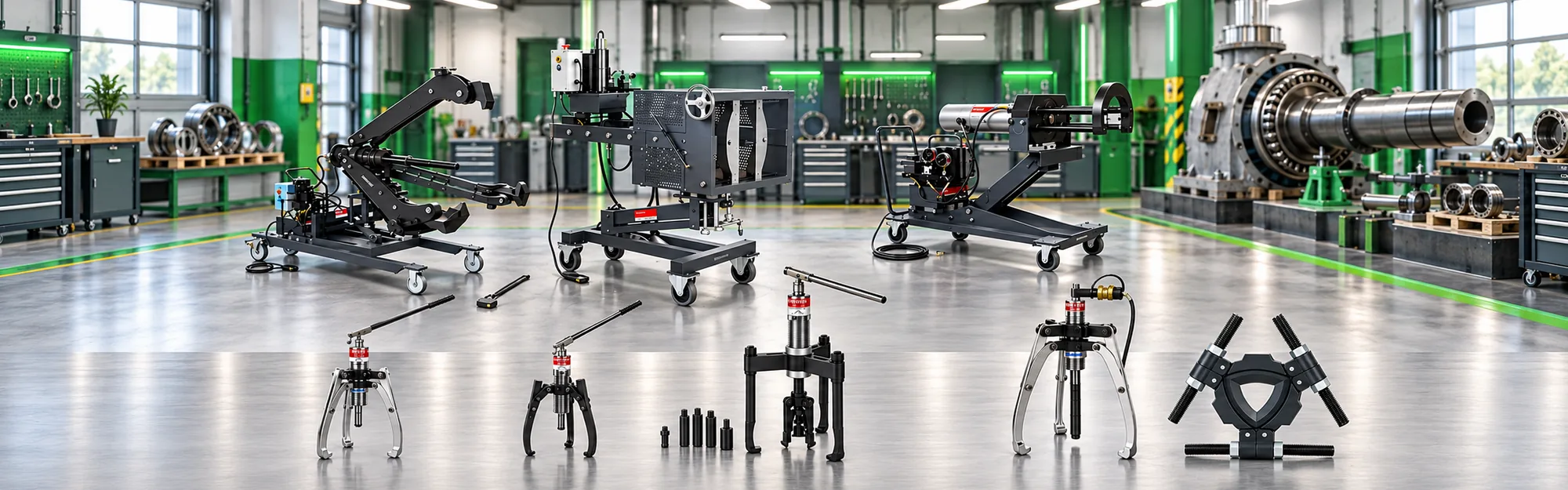
Hydraulic pullers bring together several ranges of mechanical removal tools, with load ratings from 8 to 150 tonnes. The group includes HP123 and HP203 with an integrated hand pump, 700 bar pressure. The mobile models HXPM 50 and HXPM 100 are self-centring, with interchangeable 2 or 3 jaws. The HPP123 set is a Push-Puller type providing 12 tonnes for external pulling and 8 tonnes for internal pulling. The HXP range uses a separate pump, suited to users who already have a 700 bar pump. BPP 100 is used to remove railway wheel bearings, with a maximum pulling force of 100 tonnes. Accessories include the Tri-section plate and the PM-R cylinder with integrated pump. The Schaeffler hydraulic puller sets here are directly imported and genuine.
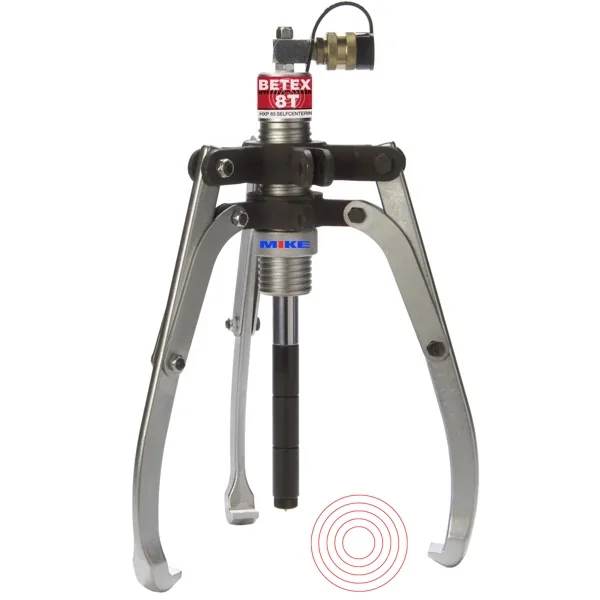




Hydraulic pullers handle the removal of bearings, gears, pulleys and parts fitted tightly onto shafts. The range here spans load ratings from 4 tonnes up to 150 tonnes. Selection usually starts from the pulling force required, the jaw opening and the reach of the arms. Models with an integrated hand pump work at a maximum pressure of 700 bar, equal to 10,000 psi, which covers most workshop removal tasks.
At the lower end, HP123 offers 12 tonnes with a jaw opening of 375 mm, spindle stroke 85 mm and reach 270 mm. Stepping up, HP203 provides 20 tonnes, a 520 mm opening, 111 mm stroke and 360 mm reach. Both run on the integrated hand pump, so no external power source is needed on site.
For heavier fits, HP303 rates at 30 tonnes with a 550 mm jaw opening, 111 mm spindle stroke and 360 mm reach. The upper band of the group moves into mobile machines. HXMP 150 reaches 150 tonnes with three jaws and an opening of 1.6 m, mounted on a dedicated trolley with an electric pump already fitted.
Pump configuration separates this range into three practical families. Some models carry the cylinder and pump in one body. Some accept a separate 700 bar pump. The mobile units arrive with an electric pump built into the trolley. The choice depends on whether compressed air, electrical supply or shop-floor mobility governs the job. Each configuration changes handling weight, setup time and the amount of extra equipment a technician has to carry.
The 2-in-1 design of HP- combines cylinder and pump, operated through a single hand lever valve that switches states. Jaw opening differs between models in the series, with maximum working pressure of 700 bar. The self-centring HSP also integrates the cylinder and pump, and jaw opening is adjusted by shifting the sliding linkage on the pump body, limited by a nut.
Where a 700 bar pump is already available, HXP covers 8 to 50 tonnes using a separate pump connection. The arrangement allows an electric, pneumatic or hand pump to drive the same puller body, which adds flexibility across different work areas. The self-centring mechanism stays in place regardless of which pump feeds the cylinder, keeping the setup consistent between tasks.
Self-centring jaws keep the pulling force aligned with the shaft axis, which matters when the component sits deep or the fit is tight. In this group, several mid and high capacity models combine self-centring linkages with interchangeable 2 or 3 jaw configurations. Mobile versions mount the puller on a purpose-built trolley with an electric pump. Operators can move the assembly to the machine. This avoids dismantling parts and carrying them elsewhere.
At 50 tonnes, HXPM 50 uses a double jaw linkage for centring, adjustable during setup. The two-jaw variant HXPM-50 targets large components such as bearings, couplings and gears. A further 50 tonne option, BETEX HXPC50, also switches between 2 and 3 jaws on the same body, with the rated weight quoted for the puller alone.
Moving up in capacity, HXPM 100 delivers 100 tonnes with a 1.5 m opening, a built-in electric pump and removable jaw tips. The two-arm configuration is listed separately as BETEX HXPM 100, again rated at 100 tonnes and self-centring. Both suit transmission parts that exceed the working range of hand-pumped units.
Some removal tasks call for pushing rather than pulling, or for internal extraction where the component sits inside a bore. The Push-Puller concept answers both by combining external pulling, internal pulling and push operation within one set. Railway workshops form a separate case, since wheel bearings on trains and metro vehicles need high force applied with a stable support arrangement. Dedicated models in this range cover that duty specifically.
The 3-in-1 set HPP123 gives 12 tonnes for external pulling and 8 tonnes for internal pulling. One set therefore covers three application modes, from inside to outside and including push work instead of traditional pulling. The components are self-centring, which helps keep alignment when switching between modes on the same job.
For rail applications, BPP 100 removes wheel bearings from trains, metro cars and large heavy-industry machinery, with a maximum pulling force of 100 tonnes. The side-shift version BPPS 100 reaches the same 100 tonne capacity, with a fixed support table that distinguishes it from the standard layout. Both serve the same removal duty on heavy rolling stock.
Accessories extend what a given puller body can reach. Separator plates grip behind a bearing inner ring where jaws cannot seat, while replacement legs and cylinders keep an existing set in service. This part of the range covers several accessories.
Each item works alongside the main models described above.
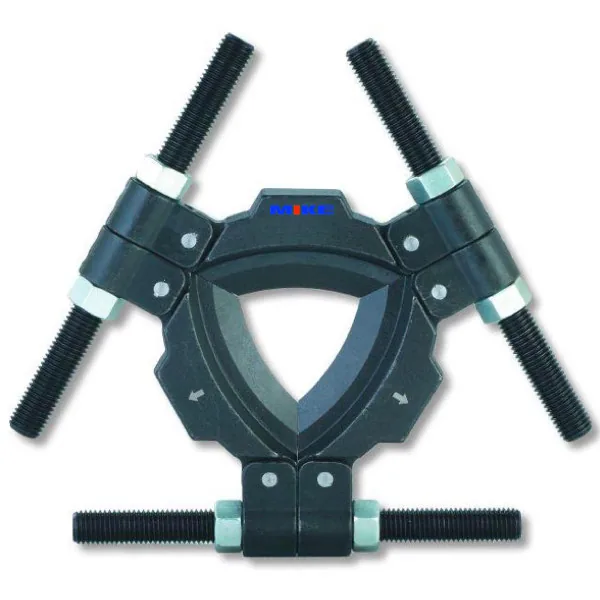
The patented Tri-section plate suits three-leg hydraulic pullers and spreads pressure evenly across all contact points. As a complete package, Tri-section set includes four models covering 4 to 12 tonnes, with applicable diameters from Ø30 to Ø340 mm depending on the set chosen.
Two-piece half-moon plates are supplied as 79.100, adding capability to 2 or 3 leg pullers. The PM-R cylinder with integrated pump fits the HP and HSP families as the force-generating unit. Replacement arms come as JA-T, while MP35 adds an 8 tonne mini press head to mechanical pullers.
Start with the pulling force the job demands, then check jaw opening against the outer diameter of the part. Reach and spindle stroke decide whether the jaws can seat correctly and travel far enough to free the component. After that, consider the power source available at the work site. Hand-pumped units stay self-contained, separate-pump models reuse existing equipment, and trolley-mounted machines suit repeated heavy work in one facility.
Jaw count is the next decision. Two jaws suit parts with limited access on two sides, while three jaws distribute load more evenly around a round component. Several models here switch between both arrangements, which reduces the number of separate tools needed. Where the bearing inner ring leaves no gripping surface, plan for a separator plate sized to the shaft diameter before ordering the puller itself.
Compare the load rating, opening and pump type for each model before ordering. Confirm the accessory sizes match the shaft and component diameters on your equipment. Product pages in this group list the specifications for each model individually.